
MONEY KILLED FASHION PART II
By Thea Elle | May 12 2026 | Couture CommentaryFashion didn’t die at the Met Gala. It just stopped being fun, and nobody admitted it.
The Met Gala and the End of Creative Freedom
There used to be something beautifully ridiculous about the Met Gala. Impossible dresses. Cigarettes in museum bathrooms. Socialites behaving like experimental theater. Designers spending six months constructing garments that looked like nervous breakdowns held together with Swarovski crystals. It was excessive, elitist, theatrical, and often absurd — which is precisely why it mattered.
Fashion, at its best, was never rational. It was a glamorous form of overreaction.
Now it feels like a compliance seminar sponsored by cloud infrastructure.
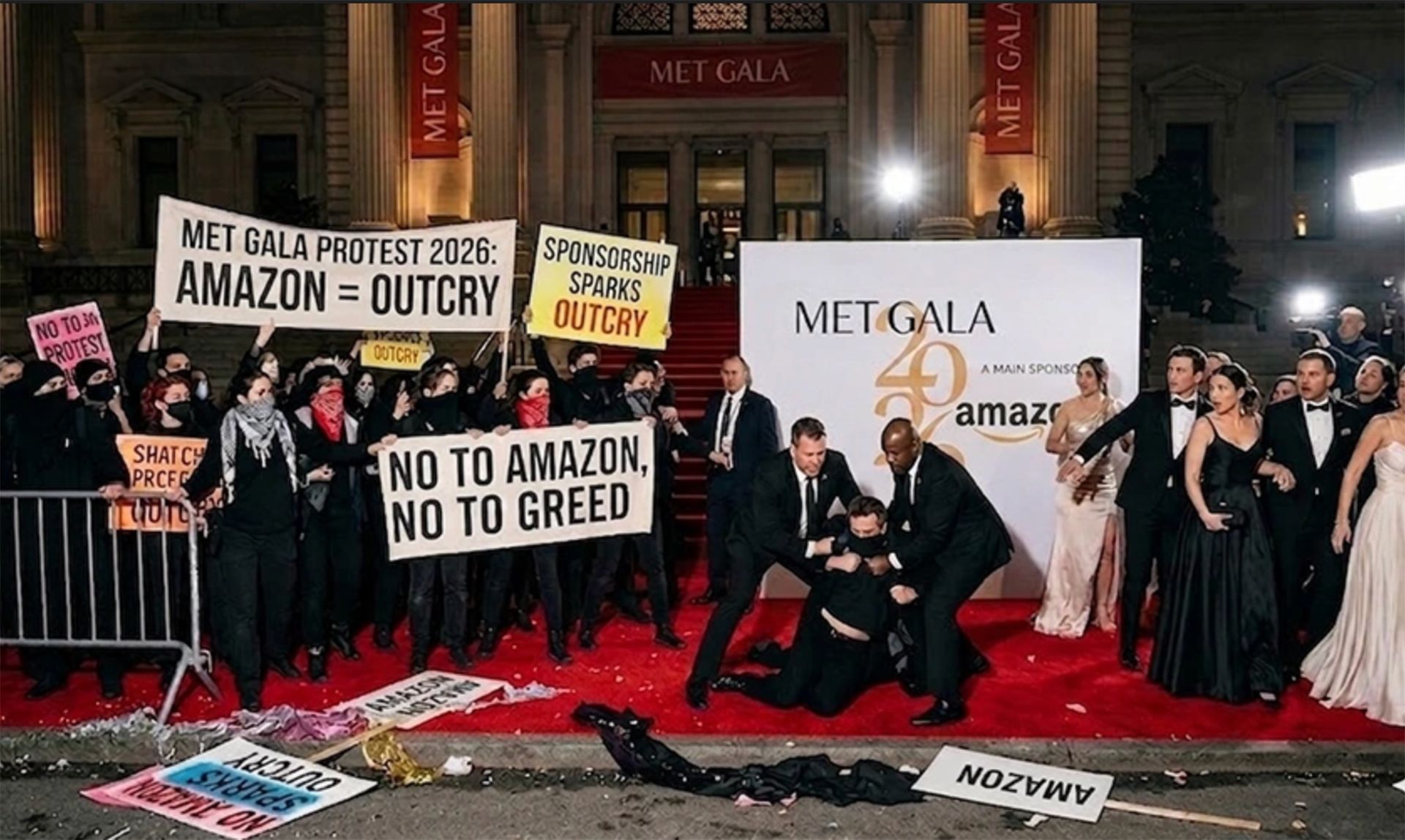
For one brief moment, the red carpet encountered reality.
The Tech Gala
This year, something shifted.
Not just because Jeff Bezos reportedly entered through the back door while protesters projected messages onto his townhouse and scattered fake urine bottles around Manhattan in reference to Amazon warehouse conditions. Not just because activists attempted to push toward the carpet itself. And not even because the guest list increasingly resembled a Davos side event populated by Sergey Brin, Adam Mosseri, Evan Spiegel, and executives orbiting Meta Platforms, Google, OpenAI and TikTok.
The shift was atmospheric.
The room itself felt tighter. More managed. Slightly nervous. Everyone appeared aware that every gesture, every sentence, every dress would immediately be clipped, memed, monetized, and fed back into the algorithm before they even reached the staircase.
Even the gowns looked burdened. Thousands of hours of craftsmanship worn like liability insurance.
The Met Gala once felt like fashion peacocking for other fashion people — a strange private language spoken by editors, stylists, photographers, club kids, rich eccentrics, and occasional lunatics. But once everybody becomes the audience, creativity slowly turns into risk management.
Nobody wants to become the meme.
So instead of glorious failure, we got expensive caution.
The Death of Weird
The great irony of hypervisibility is that it produces sameness.
Back when the Gala still felt semi-private, people could fail spectacularly. They could wear something ugly, excessive, hilarious, confusing, or completely self-indulgent. Fashion allowed embarrassment because embarrassment was part of experimentation.
Now everything arrives pre-cleared.
The room no longer rewards risk. It rewards survivable virality.
You could feel it this year. Nobody wanted to trigger the wrong discourse cycle. Nobody wanted to become a TikTok sociology seminar for three consecutive weeks. Even rebellion seemed professionally managed.
What remained was a strange form of luxury paralysis: immense resources deployed in the service of looking strategically unoffensive.
The irony is almost cruel. In an age obsessed with individuality, nobody looks truly free anymore.
Make an icon yours.
Shop Preloved Luxe now.
The Protest Had Better Styling
Meanwhile, outside the museum, fashion briefly came back to life.
Workers staged anti-billionaire fashion shows. Protesters created guerrilla installations. “Ball Without Billionaires.” “Resistance Runway.” Handmade signs. Improvised costumes. Street theater. Political absurdity.
Ironically, the protest looked more alive than the Gala itself.
Because fashion does not exclusively belong to luxury houses, museums, or corporate sponsors. Fashion leaks. It mutates. The moment people use clothes to communicate class anxiety, irony, frustration, identity, or rage, fashion escapes institutional control.
Inside the museum: sculpted gowns and corporate seating charts.
Outside: actual cultural tension.
One side looked expensive.
The other looked real.
Vogue and the Art of Selective Vision
And then there’s Vogue.
The silence surrounding the protests wasn’t accidental. It was structural. When your ecosystem depends on access to luxury conglomerates, advertisers, billionaires, tech companies, and sponsors, you do not narrate disruption. You crop around it.
Outside, the city was screaming.
Projections lit up Bezos’s townhouse. Fake urine bottles appeared around the museum. Protesters attempted to breach the carpet itself. Social feeds split into parallel realities: one showing stylists steaming couture gowns, another showing labor activists mocking the entire spectacle.
Two Met Galas existed simultaneously.
One for the invitation list.
One for everybody else.
And increasingly, the second one feels culturally more honest.

The protest looked more alive than the Gala. Better typography too.
Fashion as Infrastructure
The uncomfortable truth is that fashion no longer sits adjacent to power.
It has become an infrastructure for power.
The billionaire class no longer simply consumes culture; it integrates with it. Tech companies do not need fashion for clothing. They need it for legitimacy. Proximity to creativity softens the optics of monopolies, surveillance, labor controversies, and algorithmic control.
Fashion once absorbed power and turned it into style.
Now, power absorbs fashion and turns it into an interface.
The Met Gala no longer feels like a chaotic gathering of artists and narcissists. It feels like a summit for the people redesigning reality.
And influence, unlike style, has legal departments.
Curated Finds. Timeless Style,
Thoughtfully. CRIS & COCO.
The Real Loss
This is not nostalgia for some imaginary golden age. Fashion has always been commercial, elitist, exclusionary, and deeply entangled with money.
But it once still contained freedom.
Subculture. Humor. Sexual tension. Wrongness. Surprise.
Now everything feels optimized for post-event analytics and brand safety.
You don’t need to storm the system to feel the loss. You can see it directly in the images.
Nobody looks spontaneous anymore.
They look supervised.
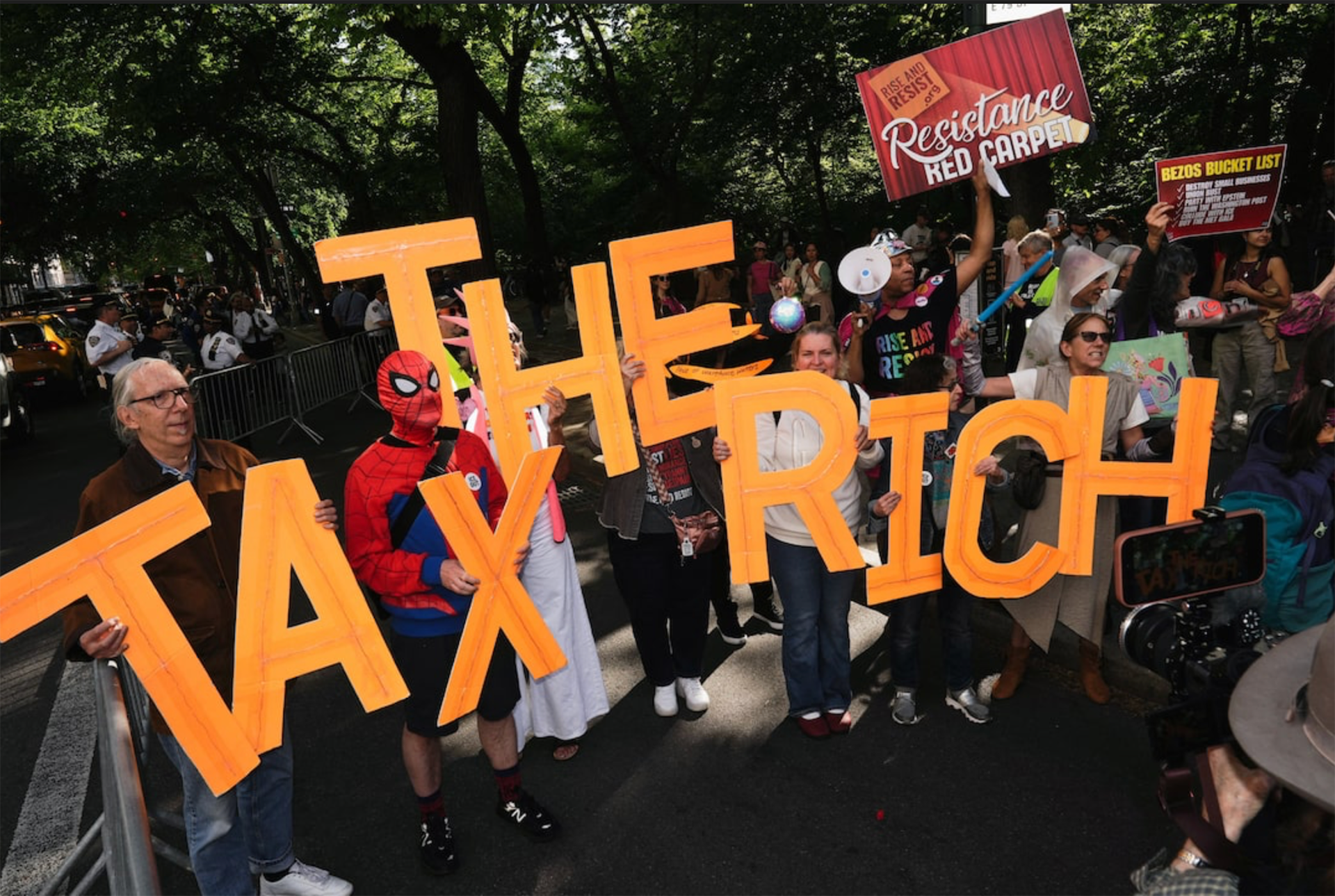
Ironically, this was one of the strongest looks of the evening.
Acquired Taste
People keep saying fashion is evolving.
Maybe.
But evolution usually produces something more alive.
This feels more like consolidation.
And consolidation rarely produces beauty.
Fashion didn’t die.
It got acquired.
Editorial Luxury Awaits