
The Birkin Lift
Why your next accessory should be your own cheeks
“But at least there’s little to no chance they will disfigure you,” Amy Odell writes of designer handbags in The New York Times. CHANEL should have that embroidered on a cushion in every boutique. After years of promising craftsmanship, heritage and timeless elegance, the industry has finally arrived at a sales argument everyone can appreciate. Carry with confidence. Your face will remain your face.
At Least the Handbag Comes Off
Consumer culture has taken a particular turn, turning an extravagantly overpriced handbag into a sensible purchase. Yet here we are, considering its practical advantages. A bag can disappoint you quietly in a cupboard. It can be lent to a friend or sold to someone who describes the transaction as acquiring an archive piece. Its previous owner can then move on, perhaps even without a consultation.

Meisel had already styled the post-op unboxing in 2005, with an IV drip and heels still on. Photograph by Steven Meisel for Vogue Italia, “Makeover Madness,” July 2005.
Imagine a woman setting out to buy one. She has cleared an afternoon, made peace with the price and prepared to receive a small object with the gravity normally reserved for an honorary degree. Then she discovers that the serious spending has moved upstairs, to a discreet clinic where the season’s most desirable accessory comes fitted to the customer.
Her handbag budget suddenly looks modest. She has arrived prepared to buy leather in an economy increasingly interested in what can be done with skin.
When the Bag Loses Its Pull
Odell describes a luxury industry whose rising prices have become increasingly difficult to reconcile with the merchandise. Questions about quality and production conditions mingle with the awkward abundance of perfectly good secondhand versions. Heritage can survive a great deal, but it struggles more with a customer holding a smartphone.
While the sales associate fetches sparkling water, our shopper finds the bag’s old retail price, a vintage original and three suspiciously persuasive alternatives. By the time the water arrives, she knows rather more about the product than the atmosphere requires. The associate returns to find the aura has developed a pricing problem.
A face offers the luxury business a fresh opportunity. Everyone can investigate what a handbag costs. A jawline can still be listed as a price upon consultation. An expert meets you, a private assessment takes place, and an appointment book serves as a velvet rope. The move from boutique to clinic feels surprisingly smooth. Both places understand discretion, flattering lighting and the commercial importance of making a customer feel selected.
The New Season Face
At a Matières Fécales show at Paris Fashion Week, models wore prosthetics that exaggerated the appearance of cosmetic procedures. Fashion had supplied the caricature. Elsewhere in her account, packages marketed as “global facial micro-optimization,” costing between $150,000 and $300,000, came with a price list. The distance between runway provocation and purchasable service had become uncomfortably short.
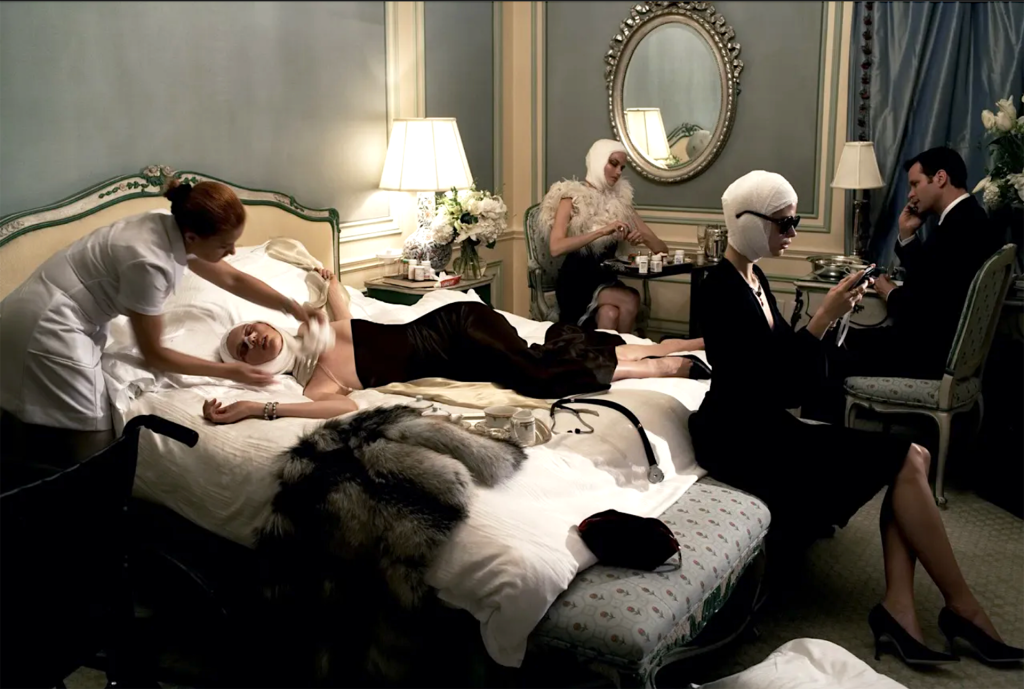
At this price, even getting it wrong comes with room service. Photograph by Steven Meisel for Vogue Italia, “Makeover Madness,” July 2005.
An imaginary beauty supplement could take it from there. This season introduces the Birkin Brow, reassuringly elevated above ordinary concerns, and the Dinner Jaw, designed to catch the last available candlelight in a private dining room. The Bespoke Cheekbone offers a more personal experience, carefully measured to produce the exact dimensions worn by everyone else at the table. Its accompanying editorial would praise the refreshing restraint of a result requiring several appointments and considerable restraint from the photographer.
The surgeon receives creative director billing. Clients discuss the doctor’s signature work with the familiarity once reserved for a favorite designer’s tailoring. On a nearby phone, an influencer unboxes the collection one bandage at a time, allowing her followers to share the intimacy of a purchase they have already seen teased across several posts.
The reveal has become a fitting, a launch and a small media event. Somewhere, an actual handbag is wondering whether it should hire a publicist.
The Luxury of Getting It Wrong
Odell floats a more unsettling possibility. Perhaps the risk itself contributes to the appeal, particularly for people able to pay for extensive care and further treatment. At that altitude, even the prospect of a problem can be cushioned by an exceptional quantity of money, assistance and available time.

The private viewing, just before she asks whether it comes in another shape. Photograph by Steven Meisel for Vogue Italia, “Makeover Madness,” July 2005.
Back at reception, our shopper overhears a client arranging a revision with the studied boredom of someone having a clasp replaced. The client checks her diary between Pilates and lunch. Her assistant will handle everything the diary fails to acknowledge, including the days that need clearing and the people who need to be told she is unavailable. Recovery can take place somewhere comfortable, safely beyond the requirements of an ordinary working week.
The surgery remains consequential. Wealth supplies the infrastructure that allows its owner to sound casually inconvenienced by it. An expensive outcome can be followed by expensive attention, with another specialist’s number already in the phone.
“We’ll put you down for alterations,” says the concierge.
It is such a well-finished sentence that everyone needs a moment.
A Down Payment You Can Wear to Dinner
Meanwhile, the unboxing reaches someone toggling between a mortgage calculator and a clinic’s installment plan. The same fantasy has arrived at a different income level, where a purchase requires arithmetic and recovery requires explaining an absence to somebody who approves it.
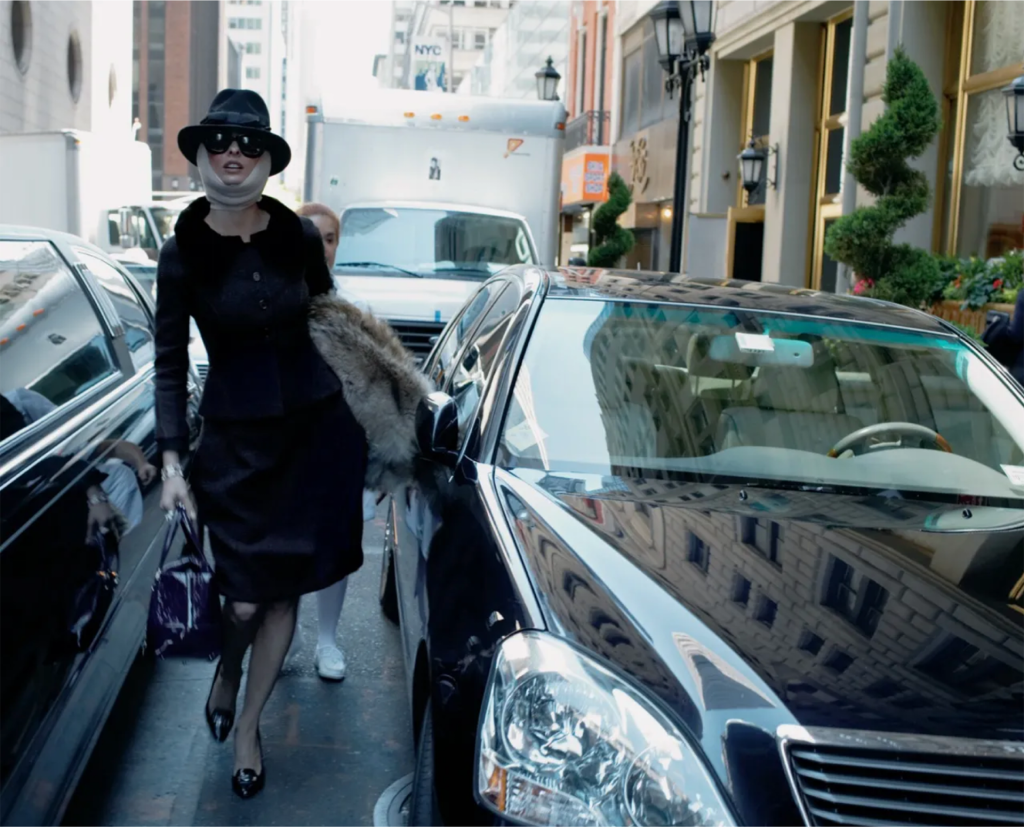
She’s still carrying the handbag, but this season’s It accessory is under the bandages. Photograph by Steven Meisel for Vogue Italia, “Makeover Madness,” July 2005.
The mortgage calculator is offering discouraging results. The clinic has a much warmer manner. It provides an appointment, a payment schedule, and the possibility of doing something this month. Homeownership remains somewhere in the distance, subject to forces the customer can barely influence. Her own face is conveniently nearby.
Building equity in yourself would make an excellent contribution from the clinic’s financial wellness department. A down payment you can wear to dinner has obvious advantages for an advertisement, particularly when dinner can be photographed. The woman in the bandages has a discount code.
Something about the pitch's efficiency is almost touching. A large frustration is answered with a manageable transaction, wrapped in the language of agency and self-belief. The customer can take a step, make a choice, see a result. The clinic has found an intimate place to sell the reassurance of progress, while the housing problem remains available to inspire further purchases.
The Face Is Final Sale
The difficulty with buying the season’s face is next season. Fashion requires fresh enthusiasm, and an industry organized around improvement has little commercial reason to announce that everyone is finished. Imagine the beauty pages welcoming a return to softness just as our customer finishes paying off her angles. Her cheekbones arrive at dinner to discover that the collection has moved on.
An old bag can wait in a cupboard until fashion rediscovers it. A face has to attend meetings throughout the intervening years. It accompanies its owner to the supermarket, appears in family photographs and turns up unexpectedly on the front camera. There is remarkably little opportunity to put it away and carry something else.
The promise of customization is beginning to come with an unusual condition. You may have exactly what you want, provided you can keep track of what you want. The reference pictures change, the editorial language changes, and yesterday’s decisive improvement becomes tomorrow’s feature worth discussing at your next appointment.
The clinic might borrow fashion’s favorite reassurance: timeless. It is a beautiful word, especially when printed beside an announcement of the new collection. Our shopper has heard it before. It was doing excellent work downstairs.
Excellent Vintage Condition
On her way home, she passes a resale shop. Inside, an appraiser is examining an old handbag with the tenderness usually reserved for something that has survived a difficult childhood. The leather has softened. Creases gather around the fastening, and the handle has acquired the visible memory of being carried. The appraiser calls this patina.
Luxury extends an extraordinary generosity to leather. Its signs of use become character, its age becomes provenance, and its survival earns a paragraph of affectionate description. A bag may spend decades acquiring the history its owner is being encouraged to remove from her face. Even the imperfections can help establish authenticity, giving the seller something to point to while explaining the price.
Our shopper watches the appraiser turn the bag toward the light. For a moment, she imagines offering her original face for the same assessment. It has been placed. It has held up reasonably well. Someone with the right vocabulary could make a persuasive case for keeping it.
She could even write the listing herself, with the tender commercial optimism that has rescued so many other perfectly serviceable objects from being considered old.
Original face, excellent vintage condition. One owner, all original features, light creasing from laughter.