
What Does Luxury Mean Anymore?
There was a time when the word luxury meant something remarkably specific.
It described objects that were genuinely exceptional. A yacht. A château. A Rolls-Royce. Things that demanded extraordinary craftsmanship, rare materials, specialized knowledge, and enough time to make efficiency almost beside the point. They were scarce because they were difficult to produce, not because somebody in marketing had decided scarcity would be good for the brand.
Today, luxury is everywhere.
There is luxury bottled water and luxury dog food, luxury candles, luxury gyms, luxury camping, luxury apartments and, inevitably, luxury toilet paper. The word has escaped its original definition and drifted into marketing, where it no longer necessarily describes what something is. It describes how someone would like us to perceive it.
Somewhere along the way, luxury stopped being a characteristic and became a business model.

The oldest object in this building may be the most valuable. Not because of the leather. Not because of the brass locks. Because every original Louis Vuitton trunk has become intellectual property capable of generating wealth long after its designer is gone. The trunk once carried possessions. Today it carries shareholder value.
When Luxury Became an Industry
Fashion wasn't always described as luxury.
For decades, the industry spoke about couture, designer fashion, ready-to-wear, leather goods, tailoring, or simply fashion houses. Even throughout the 1980s and much of the 1990s, when ARMANI, VERSACE and CHANEL dominated magazine covers, journalists weren't constantly discussing "the luxury industry." They wrote about designers, Parisian maisons, Italian fashion, collections and clothes.
The change in language reflected a change in the business.
During the late 1990s and especially after 2000, conglomerates such as LVMH, Kering, then still PPR, and Richemont accelerated the consolidation of independent houses into increasingly powerful corporate groups. Fashion became something that could be discussed not merely in terms of collections and designers, but market capitalization, margins, geographic expansion and shareholder returns.
Investors needed a category.
Luxury became an industry.
Then it became an asset class.
Eventually, it became an adjective available to almost anyone with sufficient confidence in their pricing.
This is where the meaning begins to wobble. A genuinely extraordinary object may be expensive because it is difficult to make. A luxury product can increasingly be considered extraordinary because it is expensive.
The logic has quietly reversed.
The Vanishing Designer
Fashion still tells us that we are paying for creativity, and sometimes we are. Yet many of the products generating billions today were designed decades ago.
Coco Chanel is gone. Christian Dior is gone. Guccio Gucci is gone. Yves Saint Laurent is gone. Karl Lagerfeld is gone. Virgil Abloh is gone. Jane Birkin is gone.
Their ideas remain very much alive on the balance sheet.
This isn't an argument against the companies that inherited them. Preserving, developing and distributing a great design requires enormous organizational skill. HERMÈS doesn't simply discover a Birkin in the basement every morning and carry it upstairs. Manufacturing, quality control, retail, communication and brand stewardship all create real value.
But they create a different kind of value.
The designers created culture. The corporations learned how to compound it.
That distinction becomes increasingly important when the mythology surrounding the product begins to obscure where its value originally came from.
The Business of Managing Icons
Much of modern luxury isn't really in the business of constantly inventing new icons. It is in the business of managing extraordinarily successful old ones.
The HERMÈS Kelly traces its origins to the 1930s. The LOUIS VUITTON Speedy appeared in 1930. The GUCCI Horsebit dates to the 1950s. CHANEL's 2.55 arrived in 1955. The HERMÈS Birkin emerged in 1984 after the now-famous encounter between Jean-Louis Dumas and Jane Birkin on a flight. The Lady Dior appeared in 1995.
Decades later, these objects remain cultural and commercial engines.
That is an extraordinary achievement. It also produces an uncomfortable observation: modern luxury has become remarkably good at monetizing dead designers.
The sentence sounds harsher than the business itself. Yet it points toward something we rarely discuss. Fashion celebrates creativity relentlessly while gradually separating successful creations from the people who actually created them.
The product survives.
The author fades.
The trademark becomes immortal.
Every Artifact Has an Author
People speak about owning "a Birkin."
Rarely about Jean-Louis Dumas.
They speak about owning "a CHANEL," transforming the name of a woman who died more than half a century ago into shorthand for an object, a company and an idea of status.
That is what successful brands are designed to do. They outlive their creators.
But every artifact has an author.
Somewhere, someone imagined the shape, solved the problem, drew the first sketch, rejected another one, changed the proportions, obsessed over a clasp or a handle and eventually gave physical form to something that previously existed only in the imagination.
Our culture increasingly celebrates the trademark while forgetting the mind behind it.
Which reveals a rather delicious contradiction in the industry's obsession with scarcity.
Fashion's real scarcity has never been handbags.
It is great designers.
A Birkin can be manufactured again tomorrow. It can be resold tomorrow. It can be copied tomorrow, often with unnerving accuracy.
Another Yves Saint Laurent cannot.
When Price Becomes the Product
None of this means expensive things are inherently absurd.
Some objects deserve extraordinary prices. Handwork costs money. Exceptional materials cost money. Small production runs cost money. Maintaining skills that take decades to master costs money. There is something worth defending in a world where human expertise increasingly competes with industrial efficiency.
But price and value are not the same thing.
The modern luxury machine has become exceptionally sophisticated at collapsing the distinction between them.
Price itself can create desire. Raise it high enough and the object begins communicating something independent of its material qualities. It signals access, purchasing power and membership. Add controlled distribution, waiting lists, celebrity visibility and a convincing story about scarcity, and price stops merely reflecting the product.
Price becomes part of the product.
This helps explain one of contemporary luxury's stranger achievements: consumers increasingly defend high prices on behalf of the companies charging them.
The markup becomes evidence of desirability.
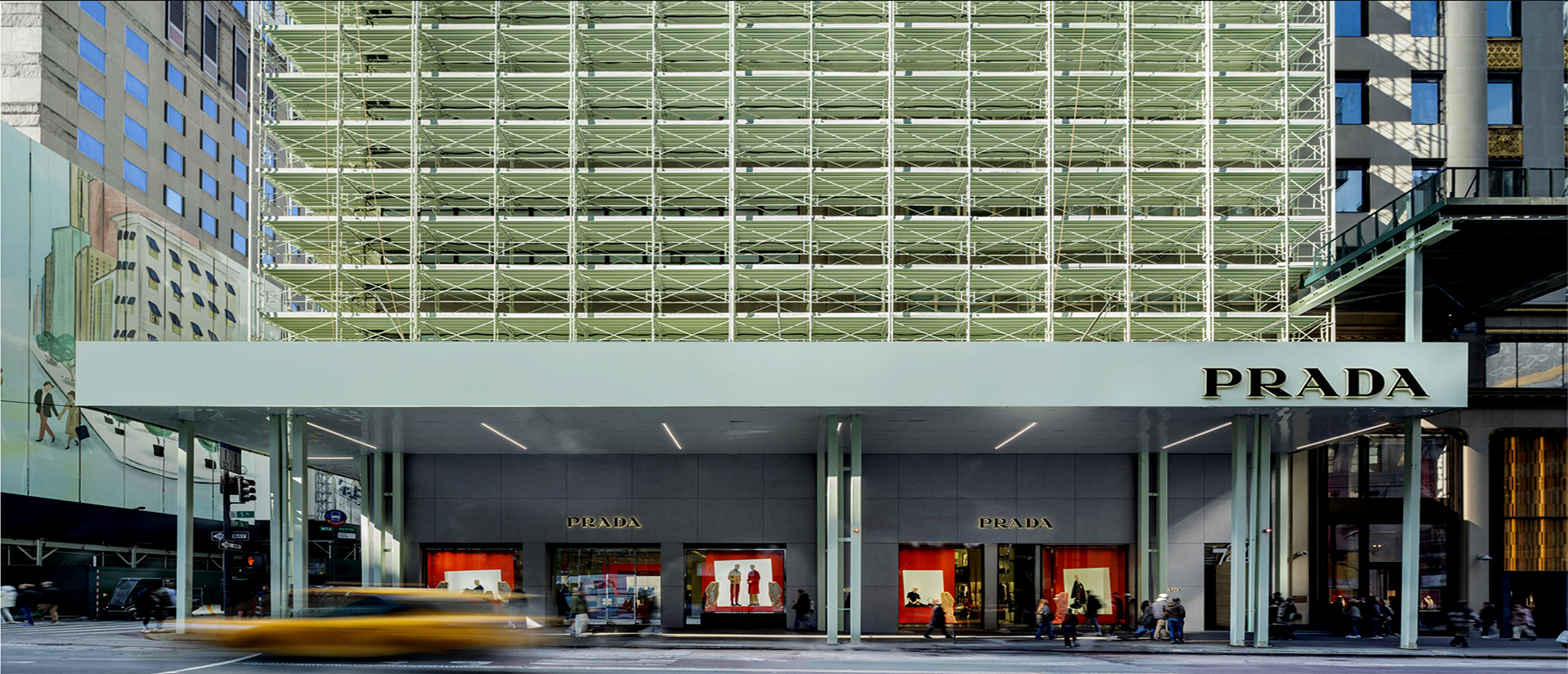
Few locations illustrate luxury's transformation better than PRADA's New York flagship, occupying the base of the Goldman Sachs headquarters. It feels less like a fashion boutique than a physical merger between aesthetics and finance. A long way from Milan's Galleria Vittorio Emanuele II, not geographically. But philosophically.
The Assetization of Desire
The transformation of luxury mirrors something much larger happening across modern capitalism.
Objects increasingly matter not only for what they are, but for what they might become financially.
Handbags become investments. Watches become portfolios. Sneakers acquire markets. Homes become financial instruments. Art becomes collateral. Limited editions become speculative vehicles almost before anyone has had time to enjoy them.
Even the language of consumption has changed.
People discuss "investment pieces." They track resale values. They calculate appreciation. They justify purchases according to what they might recover later.
The pleasure of owning something becomes entangled with the reassurance that somebody else may eventually want it even more.
Consumption quietly begins to resemble portfolio management.
And once that happens, the object itself starts disappearing beneath its financial shadow.
The market is no longer simply selling a beautiful handbag.
It is selling the possibility that desire itself can appreciate.
What Happens When Everything Becomes an Asset?
This is where luxury becomes interesting beyond fashion.
The same logic now runs through housing, art, watches, sneakers, collectibles and increasingly almost anything capable of acquiring scarcity, narrative and a secondary market.
A home can be somewhere to live and an appreciating asset. A painting can be something to look at and a store of wealth. A handbag can carry your belongings while simultaneously functioning as a small leather financial instrument.
There is nothing inherently wrong with any of this. Objects have always carried economic value.
What has changed is the degree to which financial value begins to dominate every other kind.
Craftsmanship becomes interesting because it supports price. Scarcity becomes interesting because it protects price. Heritage becomes interesting because it legitimizes price. Culture itself becomes useful because culture can be monetized.
Eventually we risk forgetting that these things once had other purposes.
Fashion was worn.
Homes were lived in.
Art was looked at.
Objects were used.
Luxury or Financialization?
Perhaps the greatest illusion of contemporary luxury is that it has become increasingly exclusive.
The opposite may be closer to the truth.
Luxury didn't simply become more exclusive.
It became more financial.
The extraordinary achievement of the modern luxury industry wasn't inventing another handbag. It was discovering how to take creativity, heritage, scarcity, identity and desire and organize them into assets capable of producing remarkably durable returns.
That doesn't make the objects meaningless. Some remain beautifully designed, extraordinarily made and culturally important. Nor does it make desire foolish. Wanting beautiful things is one of humanity's more persistent habits, and probably one of its more enjoyable ones.
But it does change the question.
Instead of asking whether something is luxury because it is expensive, perhaps we should ask what remains when we remove the price, the logo, the resale value, the waiting list and the investment narrative.
Is the object still extraordinary?
Do we still want it?
Would we recognize its value if nobody else could see us carrying it?
That may be where luxury begins again.